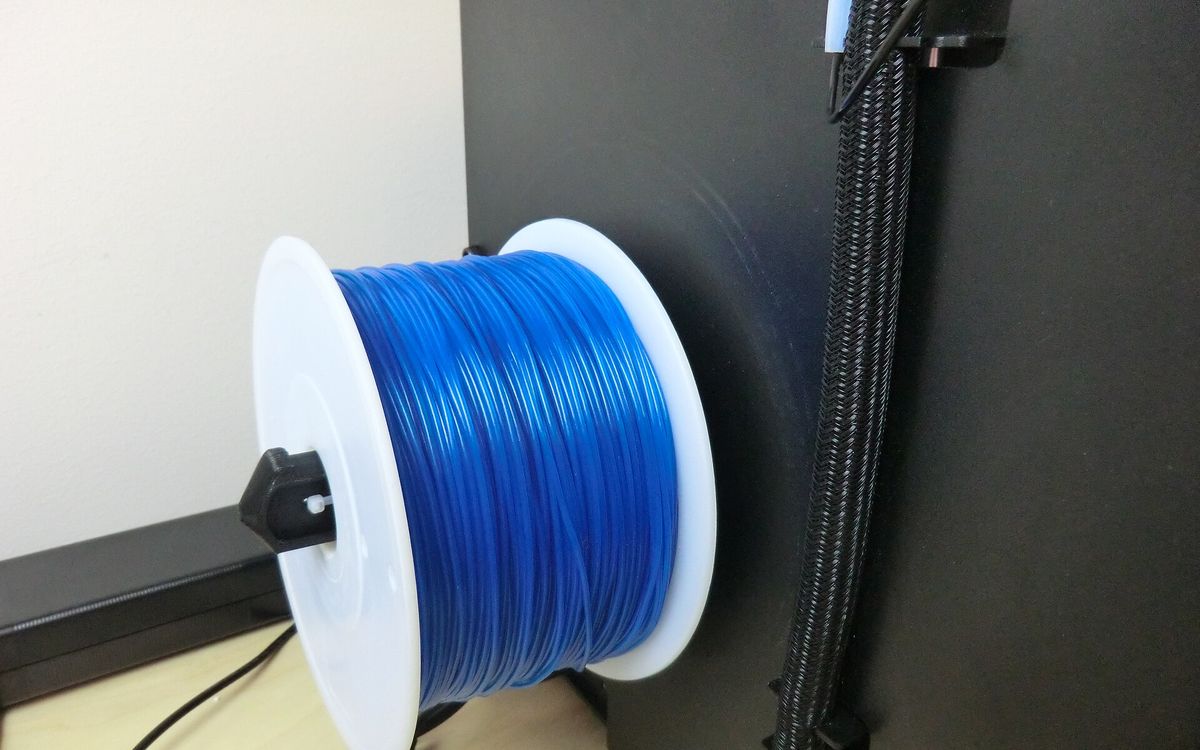
Da Nang sits at roughly 70 to 90 % relative humidity for much of the year. Most filament starts absorbing water from the air the day you open the bag, and in a climate like ours a spool left on the printer can print noticeably worse within days. We dry filament as routinely as we level beds. Here is what we have learned.
Why moisture matters
Most filaments are hygroscopic: they pull water out of the air into the plastic itself, not just onto the surface. When wet filament reaches the hot end, that water turns to steam inside the melt. The result is tiny bubbles, uneven flow and, for some materials, a chemical breakdown (hydrolysis) that weakens the plastic permanently.
Wiping the spool does nothing. The water is inside, and the only way to remove it is time and gentle heat.
Symptoms by material
| Material | How much it absorbs | Typical signs when wet |
|---|---|---|
| PLA | Low to moderate | Rough or fuzzy surface, more stringing, filament turns brittle and snaps on the spool |
| PETG | Moderate | Heavy stringing and blobs, popping sounds, hazy look on transparent colours |
| ABS | Moderate | Crackling at the nozzle, rougher walls, weaker layer bonding |
| TPU | High | Lots of bubbles, stringing, foamy extrusion, inconsistent flow |
A few signs apply to everything: popping or hissing from the nozzle, visible wisps of steam, small holes or pits in walls, and prints that were fine last month suddenly stringing with the same settings. If a known-good profile starts misbehaving, dry the spool before you start changing retraction.
Brittle PLA deserves a note. Fresh PLA bends before it breaks. PLA that snaps when you straighten it near the extruder has often absorbed moisture, though age and tight bends near the spool core also play a part. Drying usually helps, but not always.
Storage: keep it dry before it gets wet
Prevention is cheaper than drying.
- Reseal after every print. Put spools you are not using back in a bag or box with desiccant. A zip-lock or vacuum bag with a fresh silica packet works well for a few weeks.
- Use a dry box for active spools. A sealed plastic food container with a foam or rubber gasket, a layer of silica gel at the bottom and a cheap digital hygrometer is enough. Some makers fit a PTFE tube coupling through the lid so they can print straight from the box.
- Aim for low humidity, not zero. Inside the box, below about 20 to 30 % relative humidity is a good target. If the hygrometer climbs past 40 %, the desiccant is probably saturated.
- Keep spools away from windows and air-conditioner drips. Temperature swings cause condensation in boxes that are not well sealed.
Desiccant
Silica gel is the standard choice. Indicating silica gel changes colour as it saturates (commonly orange to green, or blue to pink), so you know when to recharge it. Recharge it by baking at around 100 to 120 °C for a couple of hours, or as the manufacturer recommends, then let it cool in a sealed container. Molecular sieve desiccant pulls humidity lower than silica but costs more.
Use more than you think you need. A few small packets in a large box will saturate quickly in our climate.
Hygrometers
Cheap digital hygrometers are not lab instruments. They can be off by 5 % or more, but they are good at showing trends. A box that read 15 % last week and 35 % today needs attention, whatever the exact number.
Drying filament
If a spool is already wet, you need to dry it. Typical settings:
| Material | Typical temperature | Typical time |
|---|---|---|
| PLA | 45 to 55 °C | 4 to 6 hours |
| PETG | 60 to 65 °C | 4 to 6 hours |
| ABS | 65 to 80 °C | 4 to 6 hours |
| TPU | 45 to 55 °C | 4 to 8 hours |
Check the manufacturer's recommendation first, because formulations differ. A very wet spool may need longer, and a spool that has sat open for months in humid air may need a second round.
Filament dryers
A dedicated filament dryer is the easiest option. It holds a steady low temperature, circulates air, and many models let you print directly from it, so the spool stays dry during long jobs. For TPU and PETG in a humid room, printing from a dryer makes a visible difference on prints that run for many hours.
Oven caveats
A kitchen oven can work, but it is easy to get wrong.
- Many ovens cannot hold 50 °C accurately and can overshoot by 10 to 20 °C, especially when the element cycles on. PLA starts to soften around 55 to 60 °C, which can fuse the outer turns of the spool together.
- Spool hubs are often made of plastic that deforms before the filament does.
- Use a separate oven thermometer, preheat and check the temperature before the spool goes in, and never leave it unattended.
A food dehydrator with a temperature dial is a common, cheaper alternative and is usually more stable than an oven. Some need trays removed or a spacer ring added to fit a spool.
After drying
Put the spool straight into a dry box or sealed bag. At 80 % humidity, freshly dried filament can start picking up water again within hours.
Resin storage
Resin does not absorb water the way filament does, but heat and light matter more.
- Keep it dark. Resin cures under UV and short-wavelength visible light. Store it in its original opaque bottle, out of direct sun, and keep the vat covered between prints.
- Watch the temperature. Most resins print best somewhere around 20 to 30 °C. A hot room thins the resin and can change how it responds to exposure, while a cold air-conditioned room makes it thick and causes failed prints. Store sealed bottles somewhere cool and stable.
- Shake before use. Pigments and fillers settle. Shake or stir well, especially if a bottle has sat for weeks.
- Mind the shelf life. Opened resin slowly changes. Check the label and avoid leaving resin sitting in the vat for long periods.
Humidity can still affect some resins, and IPA wash baths absorb water over time, so keep wash containers closed. For handling, see our resin safety and care guide.
A simple routine
- New spool: open it only when you are ready to print, and keep its desiccant packet with it.
- Active spools: store them in a dry box with a hygrometer.
- Anything that prints worse than it used to: dry it before tuning settings.
- Recharge desiccant when the indicator changes colour or the hygrometer climbs.
If prints still show stringing or bubbles after drying, the cause may be temperature or retraction instead. Our defects and fixes guide covers the other causes, and the material guide explains how each plastic behaves.
Need it printed?
We deal with Da Nang humidity every day at Lightning Lab, so you do not have to. Share your file through a Google Drive link with lab@lightning-studio.org, or see the Lab page for how to order.
Cover photo: Split filament spool holder for MakerBot Replicator 3D printer - 8640984986 by Creative Tools, CC BY 2.0, via Wikimedia Commons (cropped).
Related posts

3D Printing in Education: A Practical Guide for Teachers and Schools
What to print for teaching, STEM projects students can design themselves, classroom safety, budgeting and a simple lesson flow from sketch to printed part.
Tool Changers vs Filament Swappers: Choosing a Multicolor 3D Printer
Creality K3, Sovol M1D and Bambu's upcoming H3C bring tool changing to mid-range prices. How the five multicolor approaches compare on waste, time and cost.

3D Printing Cosplay Props: Splitting, Finishing and Wearability
How to split big props to fit the bed, key and join the pieces, pick PLA, PETG or resin, keep shells light, then fill, paint and pad them for wearing.